 Skip to main content Skip to footer
Helium Analyzer
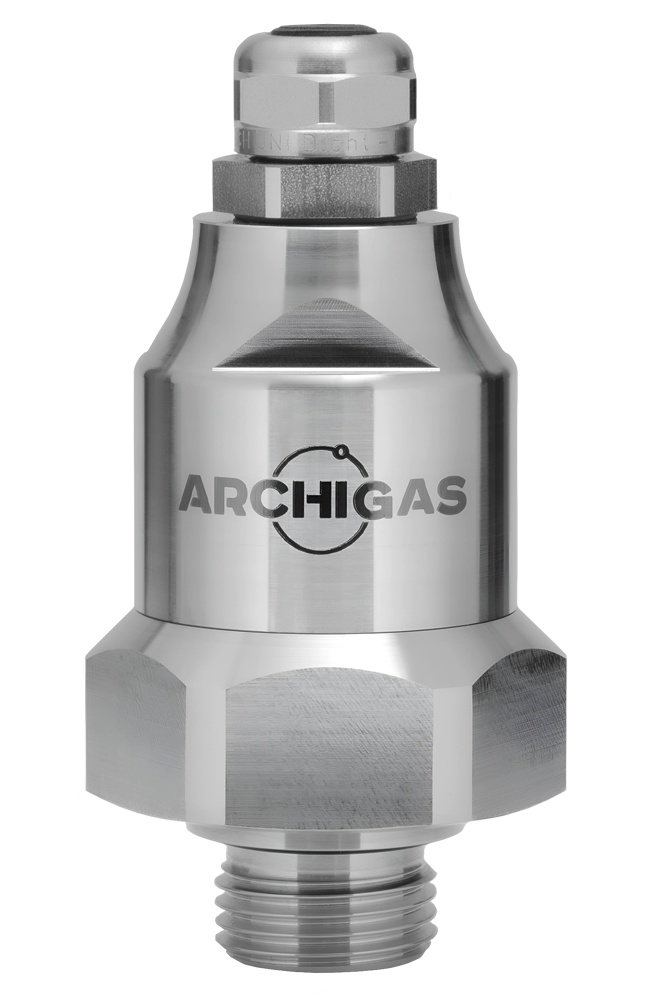
The industrial helium analyzer TCD3000 Si, developed and manufactured by Archigas, provides fast and stable helium measurement directly in the process.
Based on advanced TCD technology, the gas analyzer enables precise determination of helium concentration, even at elevated pressure. No gas sampling is required.
This solution is designed for purity control, continuous helium monitoring, and minimizing costly gas losses, including use in helium recovery systems.
Key Facts
Inline analysis
up to 200 barg without bypass and without gas sampling
Response time
Response time 30 ms, Stability < 100 ppm/week
IP66/IP68-certified housing
for industrial environments
Cost savings
through the prevention of gas losses and reduced engineering costs
Certificates and Compliance
The Archigas Helium Analyzer TCD3000 Si complies with CE directives and UL industrial safety standards, enabling safe integration into process control and gas analysis systems worldwide.


Why TCD Technology Is the Most Reliable Method for Helium Measurement
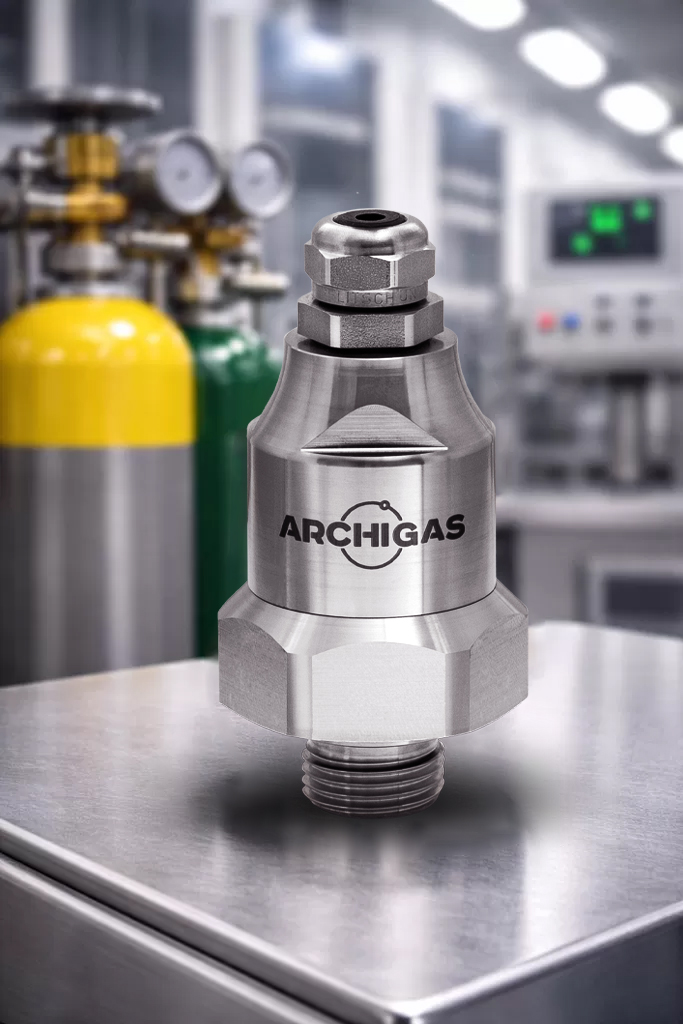
The Archigas TCD3000 Si helium analyzer, based on advanced TCD technology, improves the speed, stability, and accuracy of helium measurement in binary and quasi-binary gas mixtures. The device operates reliably under high pressure and supports inline measurement directly in the gas flow, delivering stable and reproducible results without gas sampling.
The Archigas TCD3000 Si analyzer eliminates typical drawbacks of conventional TCD sensors, including signal drift, slow response, and condensate-induced failures. The ultra-fast response to helium and reduced sensitivity to external influences are achieved through the advanced engineering design of the TCD3000 Si.
The system features easy installation, robust housing, and low maintenance requirements, making it suitable for continuous inline helium monitoring in industrial processes and laboratory environments.
Helium Analyzer Solution
TCD3000 Si Helium Gas Analyzer
The TCD3000 Si model is designed for precise measurement of helium concentration in non-hazardous areas outside ATEX Zone 1 and IECEx classified environments.
Key Benefits of the Archigas Helium Analyzer
- High sensitivity and accuracy
- Fast response time
- Compact and wear-resistant design
- Reliable performance in continuous operations
- Easy integration into existing process lines
- No helium release into the atmosphere
- No need for laboratory analysis
- Calibration without process interruption
- Reproducible results during long-term operation
- Support for a wide range of background gases
Best for:
- Cryogenic systems
- Medical diagnostics (MRI)
- Semiconductor manufacturing
- Helium recovery systems
- Process control systems
- Leak detection systems
Specifications for the TCD3000 Si Helium Analyzer
Technical specifications
Parameter | Value |
|---|---|
Measurement principle | TCD (Thermal Conductivity Detector) |
Reaction time | 30 ms |
T90 time | < 1 s |
Warm-up time | < 1 min |
Analogue output | 4-20 mA potential-bound, RL ≤ 750 Ω |
Power supply | 24 ±25 % VDC, < 5 W |
Connection thread | G 1/2" or NPT 1/2" |
Serial interface | RS485, baud rate 38400 Bd, 8 data bits |
Dimensions | H: 91 mm; Ø: 45 mm |
Weight | 440 g |
Ambient temperature | -40 to +80 °C |
Measurement performance and process influence
Parameter | Value |
|---|---|
Noise | < 10 ppm |
Measured value drift | < 100 ppm / week |
Repeatability | < 100 ppm |
Temperature influence | < 50 ppm / 10 K |
Influence of process gas pressure at zero point | < 25 ppm / 10 hPa; from 1 MPa < 2 ppm / 10 hPa |
Influence of process gas pressure for deflection gas | < 100 ppm / 10 hPa; from 1 MPa < 10 ppm / 10 hPa |
Influence of process gas flow at zero point | < 25 ppm / 10 l/h |
Influence of process gas flow rate with deflection gas | < 100 ppm / 10 l/h |
Operating conditions
Parameter | Value |
|---|---|
Process gas temperature | -40 to +80 °C |
Process gas pressure | 0.9 to 200 Barg |
Process gas flow | 0 to 10 m/s (higher flow rates on request) |
All data refer to the measuring range 0.5 vol.% H₂ in N₂
Options for the TCD3000 Si Helium Analyzer
Advantages for Implementation and Engineering
The Archigas TCD3000 Si helium gas analyzer is used as an integrated component in plants and process systems where measurement accuracy and long-term stability are critical.
- Housing protected against condensate, water, and dust
- Operation at high process pressure (up to 200 barg)
- Reliable performance across a wide temperature range
- Fast response to sudden changes in helium concentration in the background gas mixture
- Predictable behavior in response to changes in gas composition
- Long-term measurement accuracy without frequent recalibration (recommended recalibration interval: 6 months)
Archigas Services
Archigas provides engineering and service support to ensure the proper integration of the TCD3000 Si into the customer's existing plant and reliable long-term operation.
Technical assessment and consultation
Archigas engineers conduct a technical feasibility assessment for the TCD3000 Si based on the operating conditions, gas mixture composition, and required helium concentration.
Individual Configuration
The sensor is configured according to the background gas, purity requirements, and specific process parameters. This ensures the device operates correctly without additional on-site adjustments. Configuration is performed at the factory, reducing commissioning time.
Installation Support
Following product delivery, Archigas can provide technical support during installation, either remotely or on-site, to assist with integration and commissioning.
Test phase
Depending on the project, Archigas can offer a limited testing phase with individually tailored product configurations.
Maintenance
The helium analyzer does not require frequent maintenance. To maintain accuracy and compensate for cross-sensitivities, customers can perform recalibration themselves approximately every 6 months.
What the Field Engineer Says
Customers have reported annual savings of tens of thousands of euros through direct inline helium measurement with the TCD3000 Si. Since the gas is measured directly in the process, no sampling or sample preparation is required, allowing the helium to be returned to the process after measurement. Even at high pressures of up to 200 barg, the analyzer enables direct inline measurement and delivers stable, reliable results.
Dr. Erik Delp
Technical Sales

Applications of Archigas TCD Helium Sensors
The Helium gas analyzer TCD3000 Si is used in the following process applications:
Industries for the TCD Helium Analyzer
The TCD3000 Si sensor provides real-time helium measurement and contributes to reducing process losses.
Additional Accessories
Do you have technical questions or need clarification regarding the terms of use?
Contact the Archigas team to discuss the requirements for integrating and operating the gas analyzer in your project.
Additional Accessories
Archigas GmbH offers selected accessories to support the reliable connection and operation of the TCD3000 Si.
provides a stable power supply to the gas analyzer and protects the equipment from voltage surges and electrical interference.
is used to connect the gas analyzer to a computer or control system when no direct RS485 interface is available, simplifying configuration and data exchange.
Testimonials
We use the TCD3000 SiA in an AEM electrolysis test bench. The sensor is characterized by a very stable measurement signal and low drift with simple and uncomplicated calibration. Even the smallest quantities of gas are sufficient to obtain plausible values.
By using the sensor in the oxygen line of our electrolysis systems, we can quickly and reliably detect hydrogen crossover across the membrane and potential membrane and seal damage very accurately.
The sensor itself can be implemented and put into operation easily and without great effort. A practical feature is that it can also be installed in confined spaces due to its compact size. We will be equipping further systems with the device.

DI Stefan Kolar
H2i GreenHydrogen GmbH
We use the Archigas TCD3000 in electrolysis to determine the hydrogen crossover on the oxygen side and the purity on the hydrogen side. The sensors work precisely and react very quickly to changes in gas quality. They also cope very well with any moisture or residual caustic.
Another great advantage is that the gas quality can be reliably determined throughout operation without major changes to the system.
Implementation and handling are easy: the sensors are installed in the gas path and can simply be read out via a current signal.

Erik Delp
Frankfurt University of Applied Sciences
We use the solution in the areas of catalyst testing and contract research. The device is durable and accurate.
We can ABSOLUTELY recommend it and will continue to use it in the future. In our application, it has replaced an expensive quadrupole mass spectrometer.
Erik Abbenhuis
Hybrid Catalysis BV
We monitor, measure and control the atmosphere in our electrode boilers. This is because the boilers heat the water with electrodes and separate the water into various gases.
We require to control the atmosphere in the electrode boilers and have chosen to use technology from Archigas.
Alongside, that we have good experience with this technology, we also experience professional dialogue with Archigas staff.

Morten Hildebrandt Jensen
Fjernvarme Fyn
We use the TCD3000 Si from Archigas to determine the gas composition of the product gas in a test setup for zinc interstage electrolysis.
The device is able to detect from 0-100% hydrogen content with high accuracy, which is absolutely essential for the application. We obtain a stable signal without any significant noise or drift. And even with high humidity and even condensing conditions in the sample gas, the sensor delivers a reproducible signal.
Thanks to clear documentation and a well thought-out communication protocol, installation and commissioning are easy. Communication between the PC and sensor is stable.
We would also like to use the device for a later application with high pressure. If we have any questions or queries for Archigas, they respond quickly and helpfully.

Technische Universität Berlin
Chair of Powertrain Technologies
The environment at Le Mans this year gave us the perfect opportunity to test the Archigas sensors. The tests were very successful: The measurements were fast and accurate – they were exactly what we were looking for.
Mathieu Walter
H2 motorsport expert
We hereby confirm our recommendation of Archigas as a trusted and reliable manufacturer of gas sensor products. In particular, we would like to highlight the TCD3000Si model, which we have used in our projects.
Based on our experience and cooperation with Archigas, we have found the TCD3000Si and their other products to be of high quality and performance. Their support and technical service have met our expectations, and we are satisfied with the outcomes of our projects involving their technology.
We confidently recommend Archigas and their TCD3000Si product to other potential customers or partners who are considering their solutions.

Global Nova Co., Ltd.
Need Technical Details?
Get application-specific information tailored to your project requirements.
Talk to experts
FAQ
Why is helium challenging to measure?
Helium is a noble gas and is almost chemically inert under normal conditions. It barely reacts with sensor surfaces, which makes it difficult to detect using many conventional methods, such as electrochemical or catalytic sensors. In addition, helium is non-flammable and, as a monoatomic gas, does not provide suitable absorption or vibration properties for many optical measurement methods. Alternatively, helium can also be detected using mass spectrometry. However, this method is technically much more complex and significantly more cost-intensive. In industrial gas analysis, helium is therefore often measured using physical properties such as its high thermal conductivity.
What is the best method for helium measurement?
For continuous helium measurement in binary or quasi-binary gas mixtures, thermal conductivity measurement using TCD is a highly suitable industrial method. Helium has significantly higher thermal conductivity than many other gases, creating a clearly measurable effect. This method is especially suitable for defined gas mixtures, such as helium in nitrogen, argon or air, as well as for monitoring helium purity. It enables fast, stable and reproducible measurement results, even under industrial process conditions.
Which analyzer is best suited for industrial helium monitoring?
For most industrial helium monitoring applications, the TCD3000 Si is a highly suitable solution. The device is designed for direct inline use in the process, even at elevated pressure, and enables precise helium measurement without gas sampling or bypass systems. This minimizes helium losses and enables fast, stable 24/7 measurement under industrial process conditions.
Can the analyzer operate directly in the process line without gas sampling?
Yes. The TCD3000 Si is designed for inline operation directly in the process line. Helium concentration is measured in real time without gas extraction, external sampling lines, or bypass systems. This reduces system complexity and minimizes helium losses.
Can I measure helium at high pressure with the TCD3000 Si?
Yes. The sensors are certified for pressures up to 200 barg and have been tested beyond that. However, it is important to note that pressure fluctuations can affect the measurement results. In such cases, the pressure should either be stabilized or compensated for.
How do I calibrate the helium sensor?
In most cases, calibration can be carried out by the customer. We provide suitable software that allows the sensor to be calibrated easily. This means calibration can be performed directly on site without requiring a complex service visit. It is important to use a suitable calibration gas and to ensure stable conditions during calibration. A detailed step-by-step calibration guide can be found in the operating instructions.
Can I monitor the N₂ purge with the same sensor?
Yes. Multiple measuring ranges and gases can be stored on one sensor. For example, the same sensor can be used for helium in air as well as nitrogen in oxygen. The stored measuring ranges can then be switched via software.
How can I read out the measurement results?
The measured values can be read out either as an analog 4–20 mA signal or digitally via the serial RS485 interface. The digital interface is required to use the Archigas software.
